Your visit
From your first call to your follow-up, we want nothing about your appointment to be a surprise.
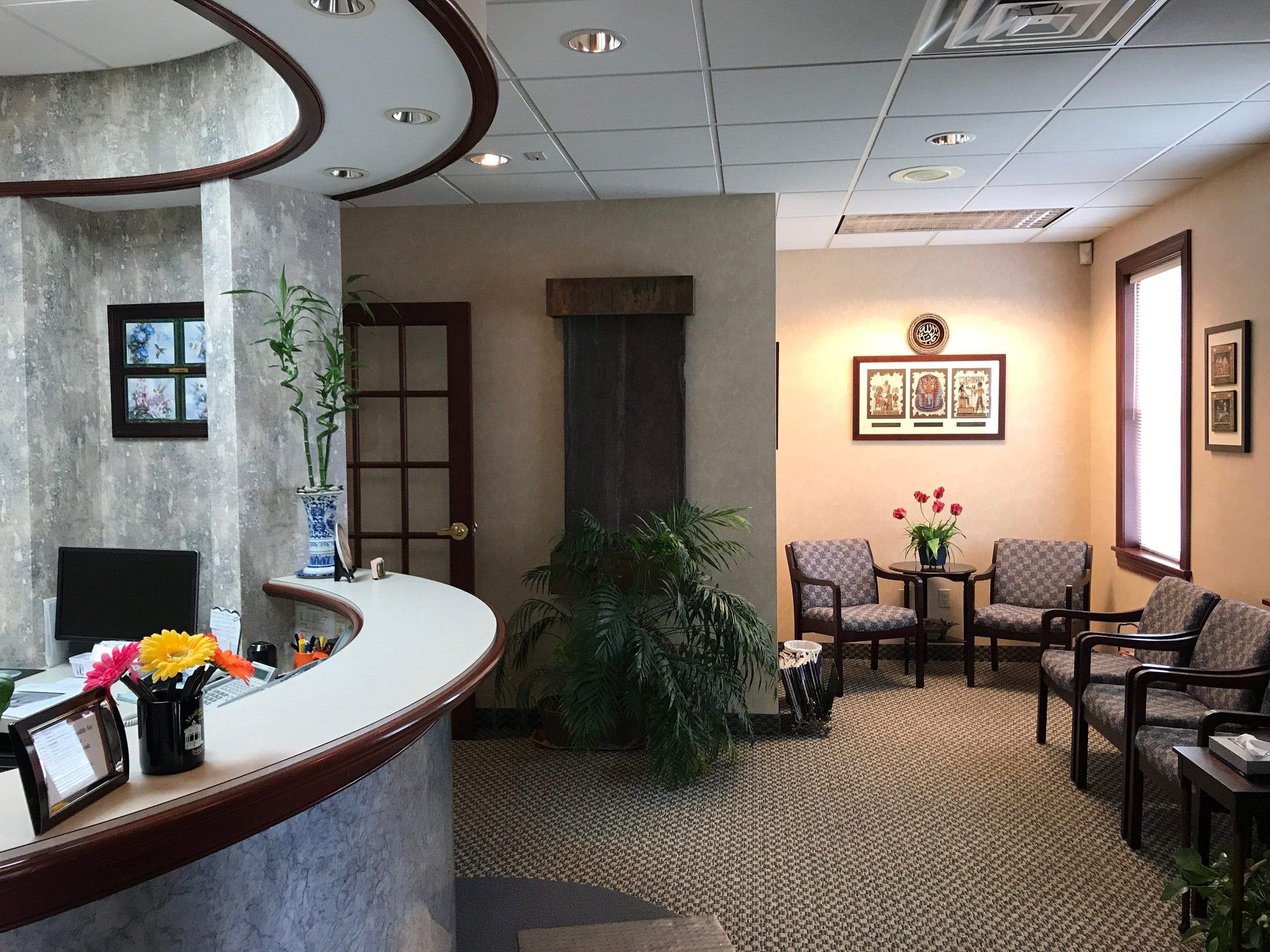
Scheduling
Call or text 330-721-1350, or send a request online. Jennifer, our administrative assistant, will help you plan your appointment. If you are in pain we try to see you the same day. Earlier morning times are available on request.
Your forms
Once you are scheduled, we send you a registration code for the patient portal, where you complete and sign your forms at home.
Your consultation
Dr. El-Refai examines the tooth, takes and reads your 2D and 3D images herself, and walks you through her findings and your options. If you are in pain, we get you comfortable that day.
Treatment
Calm, unhurried, and usually completed in one visit. Local anesthetic keeps you comfortable, and oral or IV sedation is available if you feel anxious.
Afterward
Your tooth leaves with a permanent filling. Expect some tenderness for a few days, and see your dentist for the final crown if one is needed.
Please bring
- Your dental insurance card, if you have one
- A list of your medications
- Any referral slip or x-rays from your dentist
- Your completed forms from the patient portal, if you can
Appointments missed or cancelled with less than 48 business hours' notice carry a fee. Emergencies can occasionally cause delays; we work hard to stay on schedule and appreciate your patience.
Before your appointment
- Eat a full breakfast or lunch, unless you have been told otherwise for sedation.
- Keep taking your regular medications for blood pressure, diabetes, thyroid or other conditions, as your physician recommends.
- If your physician or dentist has told you to take antibiotics before dental visits, for example because of a heart condition or a joint replacement, take them as directed on the day of your appointment.
- If you can safely take ibuprofen (Advil) or naproxen (Aleve), a normal dose 2 to 4 hours before treatment helps reduce inflammation.
- Questions about any of these? Call us before your appointment.
After treatment
- Some tenderness in the tooth and gum for several days is normal.
- Ibuprofen (Advil), aspirin or acetaminophen (Tylenol), taken as directed, usually eases it. Avoid alcohol while taking them.
- Chew on the other side until your tooth is fully restored. A treated tooth is more likely to crack until it has its final restoration, usually a crown.
- Eat soft foods for the first day or two, and avoid sticky, chewy or hard foods.
- Keep brushing and flossing as usual.
- If discomfort is not controlled by these medications, or if swelling develops, call us right away. Patients of ours can reach us after hours at 330-416-8297.
Questions about your visit
Can I drive myself home?
After local anesthetic alone, yes, and there are usually no restrictions on returning to work. If you choose sedation, please arrange for someone to drive you.
Will my tooth be sore afterward?
It is normal for the tooth and gum to feel tender for a few days. Over-the-counter pain relief usually handles it. Call us if the discomfort is not controlled or if swelling develops.
Is there a follow-up visit?
Yes. A short follow-up exam lets Dr. El-Refai check how your tooth is healing. Your first check-up is included in your treatment at no extra charge.
What happens after my root canal?
We seal every treated tooth with a permanent filling, not a temporary one. If your tooth needs a crown, see your general dentist within a few weeks; we send them your report and images.

Relief starts with a call
Call or text, and we will find the soonest time that works. If you are in pain, tell us when you call, and we will do everything we can to see you the same day.
3985 Medina Road, Suite 160, Medina. Mon, Tue, Thu 7 am to 4 pm; Wed by appointment; Fri closed.