Root canal treatment
A root canal removes inflamed or infected pulp from inside a tooth so you can keep your natural tooth. It is done under local anesthetic, most teeth are treated in a single visit, and most people are back to their normal routine within a day or two.
When a root canal is needed
At the center of every tooth is the pulp, a soft tissue of nerves and blood vessels. Deep decay, a crack or chip, repeated dental work, or an injury can let bacteria reach it. Once the pulp is inflamed or infected, it cannot heal on its own.
Signs include:
- a severe toothache, especially when chewing
- sensitivity to hot or cold that lingers
- tender or swollen gums near the tooth
- a pimple or blister on the gum
- a tooth that has darkened, or a chipped or cracked tooth
Sometimes there are no symptoms at all, and the problem shows up on an x-ray.
Your first visit
Dr. El-Refai examines the tooth herself and takes 2D and 3D images. She reads your 3D scan closely and goes through it with you on the screen, so you understand exactly what is happening and every option you have. If you are in pain, she numbs the area and gets you comfortable that day. We then schedule your treatment, usually for a separate visit.
If you feel anxious, nitrous oxide or oral sedation can help, and IV sedation is available with a board-certified dentist anesthesiologist.
During treatment
- Numbing. The tooth is fully numbed and isolated to keep it clean and dry.
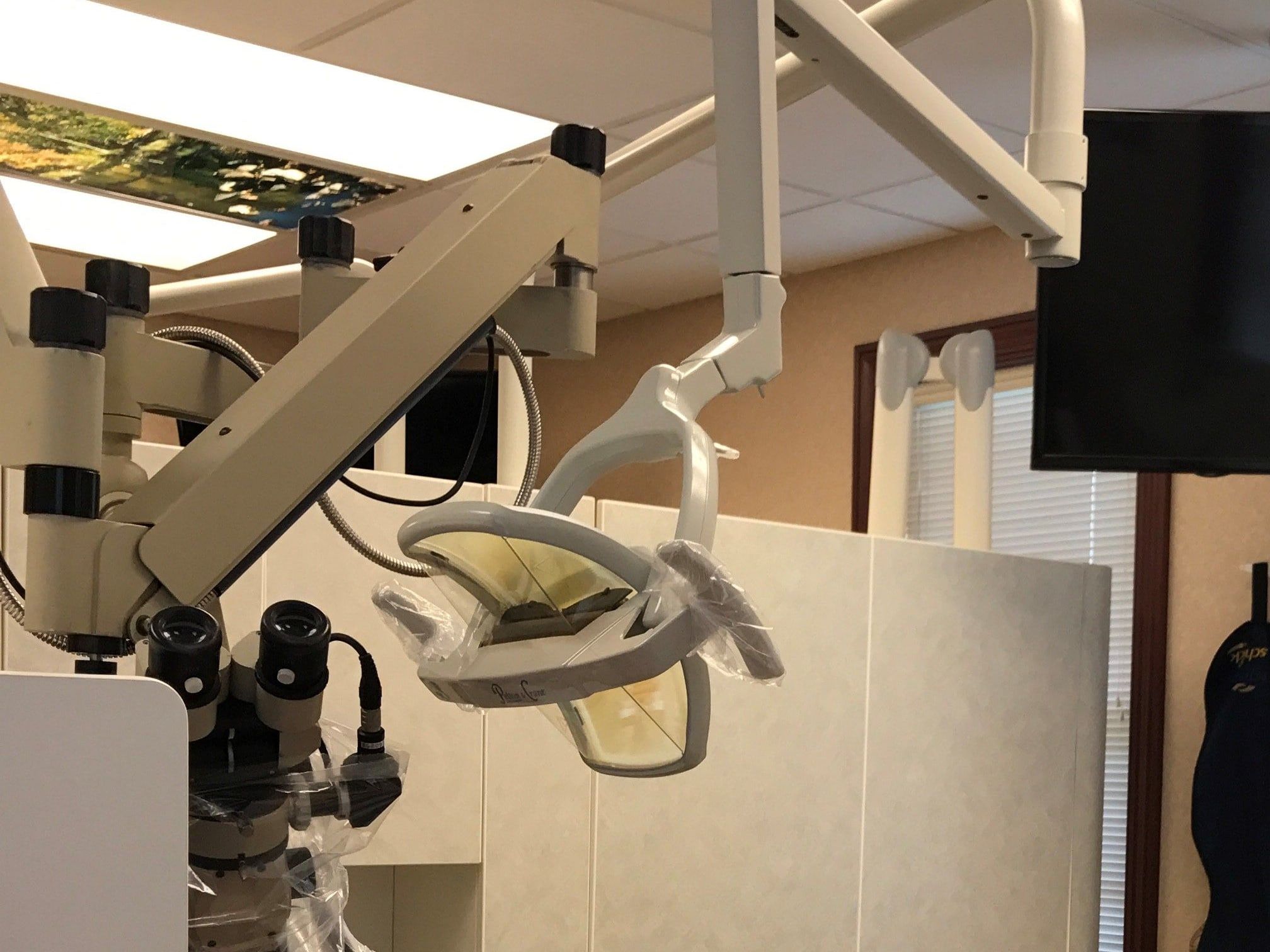
- Cleaning. Working under a surgical operating microscope, Dr. El-Refai removes the damaged pulp and cleans the canals. For many teeth we use the GentleWave procedure, which cleans deep into the complex branches of the root canal system.
- Sealing. The canals are filled with a bioceramic sealer and gutta-percha, both biocompatible materials that seal the tooth against reinfection.
- A permanent filling. Every treated tooth is closed with a permanent filling, never a temporary one, to protect it from leakage, one of the main reasons root canals fail.
Most teeth are treated completely in this single visit.
Afterward
Your tooth may feel tender for a day or two. Chew on the other side until your tooth is fully restored. If it needs a crown, your general dentist places it, and we send them your report and images.
Common myths
“Root canals are painful.” Modern anesthetics make treatment about as comfortable as having a filling. The pain people remember is usually the toothache before treatment, which a root canal relieves.
“Root canals make you sick.” This idea comes from research in the 1920s that was discredited decades ago. There is no valid scientific evidence linking root canal-treated teeth to disease elsewhere in the body.
“Pulling the tooth is the simpler choice.” An extracted tooth has to be replaced to keep your bite and jawbone healthy, which usually means more treatment and more cost. Nothing looks, feels or works quite like your natural tooth.
Questions patients ask
Will a root canal hurt?
The tooth is fully numbed first, and most patients feel pressure rather than pain. A root canal relieves pain; it does not cause it. Many patients are surprised by how comfortable it is, especially after the toothache that brought them in.
How long does the procedure take?
Most root canals take 60 to 90 minutes. Teeth with long, curved or complicated roots can take up to two hours.
How long is recovery? Do I need time off work?
Most people feel back to normal within 24 to 48 hours. Mild tenderness is common and usually eases with a cold compress and an over-the-counter pain reliever. You can drive yourself home after local anesthetic alone.
What can I eat afterward?
Stick to softer foods until your tooth is fully restored, and chew on the other side. Good choices include smoothies, yogurt, soup, mashed potatoes, soft pasta, scrambled eggs, oatmeal, applesauce and soft fruits and vegetables. Avoid sticky, chewy or hard foods.
How long does a root canal last?
A successful root canal can last 20 years or more. The restoration placed afterward matters most, so see your dentist within a few weeks if your tooth needs a crown. If you clench or grind, a night guard helps protect it.
How much does a root canal cost?
It depends on the tooth, how much damage or infection there is, and whether you choose sedation. Dr. El-Refai reviews your case, and we give you a detailed, accurate price before your treatment is scheduled.
Why see an endodontist for a root canal?
Endodontists complete at least two additional years of specialty training after dental school and focus entirely on root canal treatment and related care, often performing 25 or more root canals a week. They also use specialized tools such as the surgical operating microscope and 3D cone beam imaging.
Is it better to pull the tooth instead?
Keeping your natural tooth is almost always the better choice. After an extraction, neighboring teeth can shift and the jawbone begins to shrink, and replacing the tooth with an implant or bridge usually costs more. If extraction is ever the better option, we will tell you why.
Related

Relief starts with a call
Call or text, and we will find the soonest time that works. If you are in pain, tell us when you call, and we will do everything we can to see you the same day.
3985 Medina Road, Suite 160, Medina. Mon, Tue, Thu 7 am to 4 pm; Wed by appointment; Fri closed.